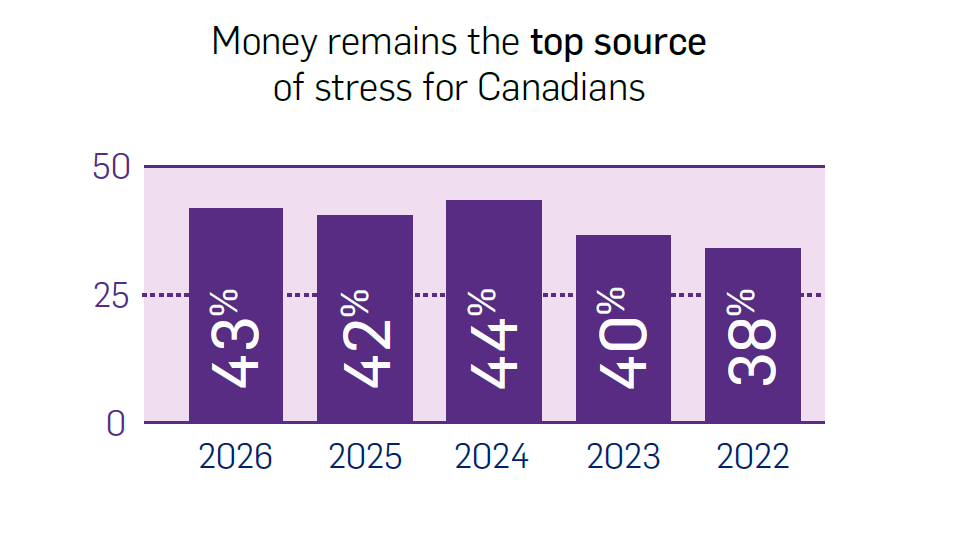
The Financial Stress Index, which is now in its ninth year, offers a snapshot of how Canadians are feeling about their finances. It identifies key causes of financial stress across the country, and—when considered alongside results from previous years—reflects shifts over time.
The results reveal that just a fifth (19%) of Canadians receive advice from a financial professional to help reduce their financial stress. While it’s great to see that a sizeable percentage of people in Canada are receiving support, many more may be feeling alone as they try to manage the financial pressures they’re facing.
As a planner, you’re uniquely positioned to help people from all walks of life understand the important role that financial planning can play in helping them create paths to financial well-being.
Helping Canadians Make Bigger Strides
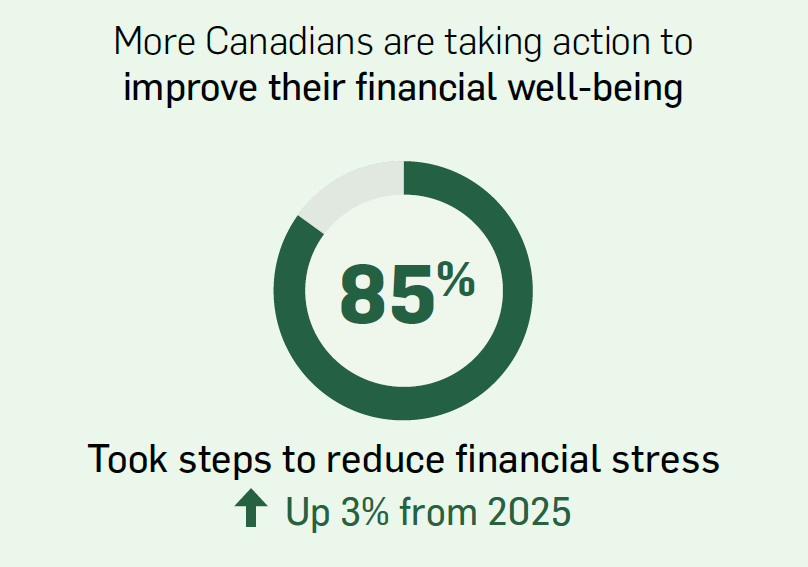
The majority of Canadians (85%) are taking steps to improve their finances this year, up from 82% in 2025. The fact that so many people are taking positive action to improve their financial situations is encouraging—and there’s more good news. Although financial stress remains a reality for many, the results show that professionals like you are making a difference.
Only a third (34%) of Canadians who work with a financial professional, such as a CFP professional or QAFP professional, report that money is their top source of stress. That number rises to nearly half (48%) of Canadians who don’t.
At the same time, there’s a significant gap between those who could benefit from professional advice and those who receive it. Our findings reveal that many Canadians believe they face obstacles to taking control of their finances. A full third say they feel like any actions they take won’t make a difference, or that they don’t know how to start improving their financial situation.
That’s why spreading the word about the value of financial planning has never been more important. It can help those who are already taking positive action build on their momentum—and encourage those who aren’t doing so yet to take the first step.
Here are a couple of considerations for financial planners:
- Education is critical – Helping Canadians understand the benefits of a holistic financial plan—and where they can access credible advice—is key. One way you can support this effort is by sharing helpful resources within your networks, such as those available on our Financial Stress Index page designed for consumers.
- Remind Canadians they aren’t alone – Whether you’re working with a long-time client or connecting with your network, reassuring people they aren’t alone in their financial stress can make all the difference. Financial Stress Index findings bear this out—and they can spark meaningful conversations about what’s causing the most financial stress in your clients’ lives.
Focusing On What Matters Most
As a professional financial planner, you see how financial stress impacts your clients’ lives every day. You also see the transformative change that having a carefully-considered financial plan can make—and you know that a one-size-fit-all approach doesn’t work.
Part of the value a CFP professional or QAFP professional provides is helping clients understand that there’s no single “correct” set of life circumstances, goals, and priorities. The 2026 Financial Stress Index is a testament to how diverse the needs and objectives of Canadians are—and its results can inform discussions with clients from all walks of life. Here’s just one example: two-thirds (67%) of Canadians define achieving financial well-being as not having to worry about money day-to-day. Many also associate it with retiring comfortably (59%) or paying off debt (53%).
As you explore the results of the 2026 Financial Stress Index, here are some things to consider:
- Data can broaden perspectives – Research about Canadians’ financial attitudes and behaviours can offer valuable context as you support clients who are navigating financial decisions. It provides an awareness of broader trends, which can help any professional see the full picture and deliver more informed advice.
- You know your clients best – professional financial planner, you have the ability to interpret data through the lens of a client’s unique circumstances. Because you know your clients’ goals, priorities, and concerns, you can decide which insights are applicable—and translate them into personalized guidance that’s both meaningful and actionable.
Insights for Financial Planning Practice
As a CFP professional or QAFP professional, you have the knowledge, skills, and ethical understanding to act as a trusted partner in your clients’ financial journeys. That’s something that all Canadians deserve, regardless of their age, income, or life circumstances.
The 2026 Financial Stress Index can be a useful tool to help you champion the financial planning profession and inform your practice as you help clients create paths toward financial well-being. Here are two more key takeaways for financial planners:
- There’s power in a positive perspective – It can be difficult to appreciate progress when there’s so much negative financial news. Celebrating actions and achievements, no matter how small, can help Canadians maintain a healthy perspective.
- There are plenty of resources to explore – The FP Canada consumer website provides a wealth of resources that you can share with your clients—from colourful visuals to an article containing helpful tips and much more. They’re designed to help consumers learn more about financial stress and how a professional financial planner can help.
You can also explore more insights and resources for professional financial planners like you. Check out our infographic, complete findings, and some sample social media posts that you can use to spread the word within your networks. You’ll find it all on our 2026 Financial Stress Index web page.